Last updated on 12 May 2026
The country was affected by an episode of cold and snow remarkable for its intensity during the first week of January . Then the storm Goretti passed in the night of January 8 to 9, with gusts reaching 182 km / h on the Normandy coast. Another storm to follow, not to mention the … floods
Your students saw the pictures. Some may have been stuck at home. Others have asked questions that you did not anticipate. ‘Mistress, is it because of global warming?’ But if the planet is warming, why is it snowing so much?
These landmark events are great gateways to talk about the climate in the classroom. To explain, nuance, give keys to understanding. It is still necessary to find the right supports.
How can we explain global warming to the youngest?
Good news: the web is full of quality educational resources with climate educational sequences to address climate change with your students. Age-appropriate resources, which do not oversimplify but also do not drown under the data. I selected five. Free of charge. Tested. Ready to use.
The climate, my planet … and me – La Main à la Pâte
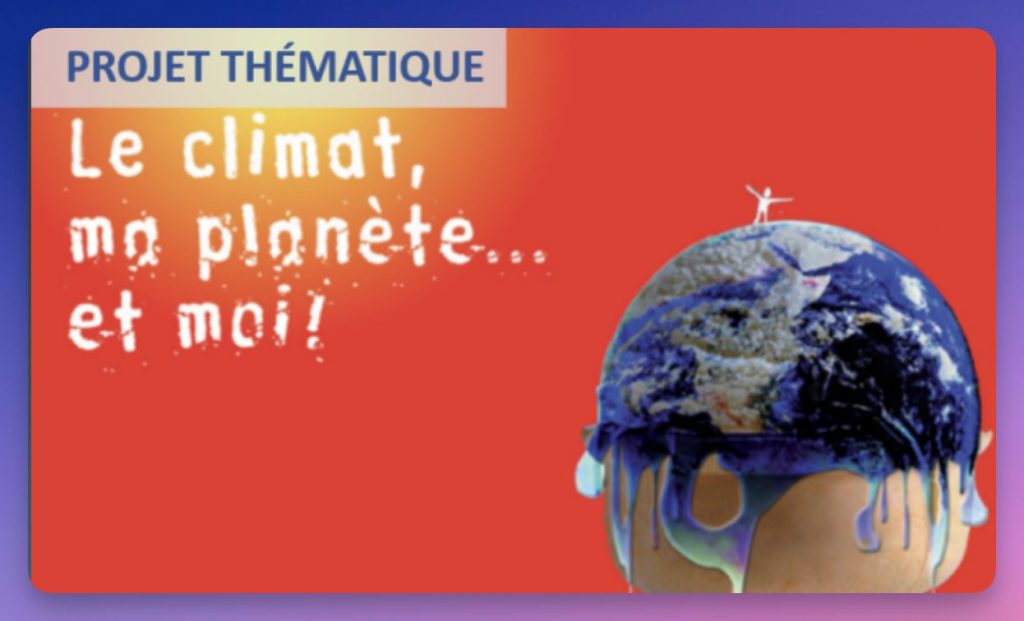
This is one of the essential references for primary education proposed by hand to the dough. This complete course offers 11 turnkey sequences to build a real class project over several weeks. There are student cards, solid scientific insights and multimedia animations that capture attention.
The approach is rigorous without being overbearing. The natural and human causes of warming, the observable consequences, the possible actions: everything goes through. The big asset? The approach ofscientific investigation which places the pupil in a researcher’s position. Ideal for developing critical thinking while anchoring learning.
→ Discover the project on foundation-lamap.org
Educational resources of Météo-France
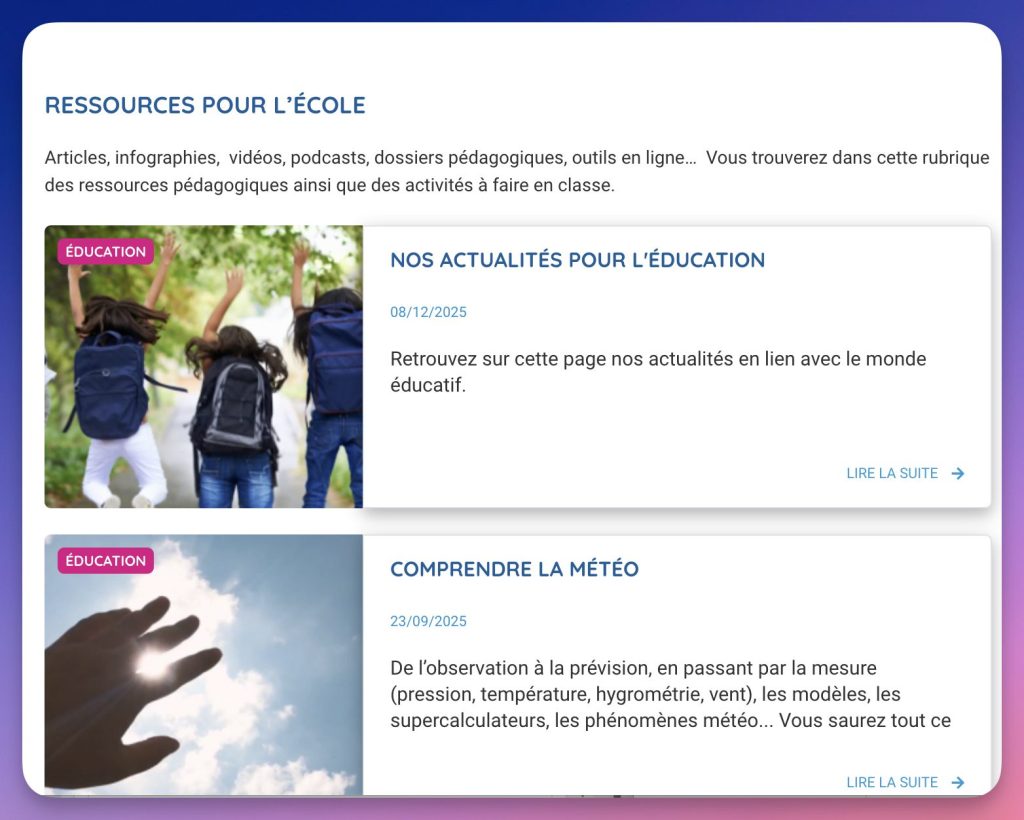
Météo-France's institutional portal offers particularly well-constructed "Understanding the weather" and "Understanding the climate" files. Rather designed for middle and high school, they remain usable from cycle 3 with a little adaptation.
What makes the difference here? The scientific rigour of a reference institution. You will be able to work on the fundamental distinction between weather and climate, address extreme events, introduce the notions of greenhouse gases. The content is technical but accessible. Perfect for curious students who want to go further.
→ Access resources via Weather France
M ta Terre – Youth Climate Site
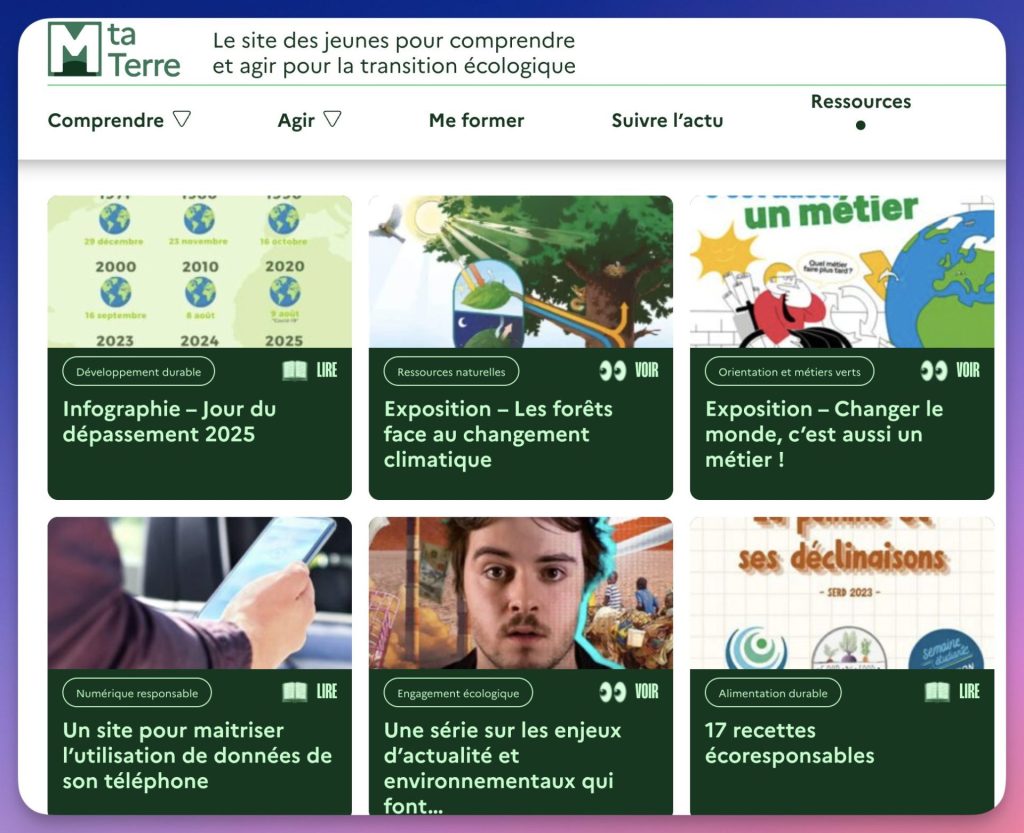
Led by ADEME, M ta Terre is aimed directly at middle school students with a suitable tone and various formats. The section dedicated to climate change includes: quiz, games and thematic files to understand the impacts of warming.
Originality? The playful approach that combines learning and commitment. Students discover the Eco-gestures to be implemented on a daily basis. They can even vote in polls about the climate films that marked them. A clever way to start from their cultural references to anchor scientific notions.
→ Explore the games section on mtaterre.fr
Bayard Jeunesse - Understanding everything about climate
Bayard Education had the great idea of bringing together its best climate articles from Apple of Api, Youpi and Images Doc. The result? Selection by age group : 3-6 years old, 5-8 years old, 8-12 years old.
The factsheets explain climate and warming with simple words, concrete examples, talking illustrations. Cherry on the cake: two experiments that are easy to do in the classroom to understand the greenhouse effect and solar energy. Concrete, manipulable. Exactly what children need to integrate abstract concepts.
Small downside: you have to create an account (free) to download the sheets.
→ Download the factsheets on bayardeducation.com
La Salamandre Junior – The climate explained to children
The Salamander offers a series of educational videos for 8-12 year olds which clarify the difference between weather and climate. The short and dynamic format is perfect for classroom use.
The strength of these videos? They start from the day-to-day life of children. The sun as the ‘driver’ of the climate, the atmosphere that traps heat, the human activities that unbalance all this. It is clear, it is visual, it is effective. And it ends with concrete courses of action: cycling, saving water, repairing rather than replacing.
→ Watch the videos on salamandre.org
How can these resources be used in the classroom?
These five resources complement each other quite well. Here are some concrete pedagogical scenarios.
For a complete sequence over several weeks, leave the course La Main à la Pâte. Structure your progress around the 11 sequences and enrich with Salamandre videos.
For a differentiated approach, use Bayard cards by level. The youngest will work on ‘What is the climate?’ while the most advanced will analyse the Images Doc content.
For a quick discovery session, launch a Salamander video and then continue on a quiz M your Earth. Twenty minutes is enough to lay the groundwork.
For interdisciplinary work, cross the Météo-France resources (sciences) with the files La Main à la Pâte (geography) and the Bayard experiments (technology).
What do all these resources have in common? They are free and accessible without registration (except Bayard who requests the creation of an account). No excuse not to test them.
Five sites to talk to your students about the climate
Quality educational resources to address the climate issue in class with your students. You will surely discover elements to answer their questions and material to awaken their curiosity!
Fidel Navamuel – Tice Tools
Five resources, five complementary approaches. The scientific rigor of Météo-France and La Main à la Pâte. Your Earth’s playful engagement. Adaptation to Bayard's ages. The effective video format of La Salamandre.
Enough to help your students understand the world that awaits them. These resources give you the keys to accompany them. And as always, test them, adapt them, make them your own.
Do you have others to advise?
 English