Last updated on 12 May 2026
Find a film or documentary to broadcast in class is often part of the fighter's journey. Between YouTube links disappearing on the eve of the course, inappropriate ads popping up in the middle of an explanation and the thorny issue of copyright, school-based video streaming remains a source of friction.
Say hello to a great site: WikiFlix.
WikiFlix offers organised access to several thousand films in the public domain, available for free, without account, without advertising, via an interface reminiscent of video-on-demand services while remaining backed by the Wikimedia ecosystem. I love it.
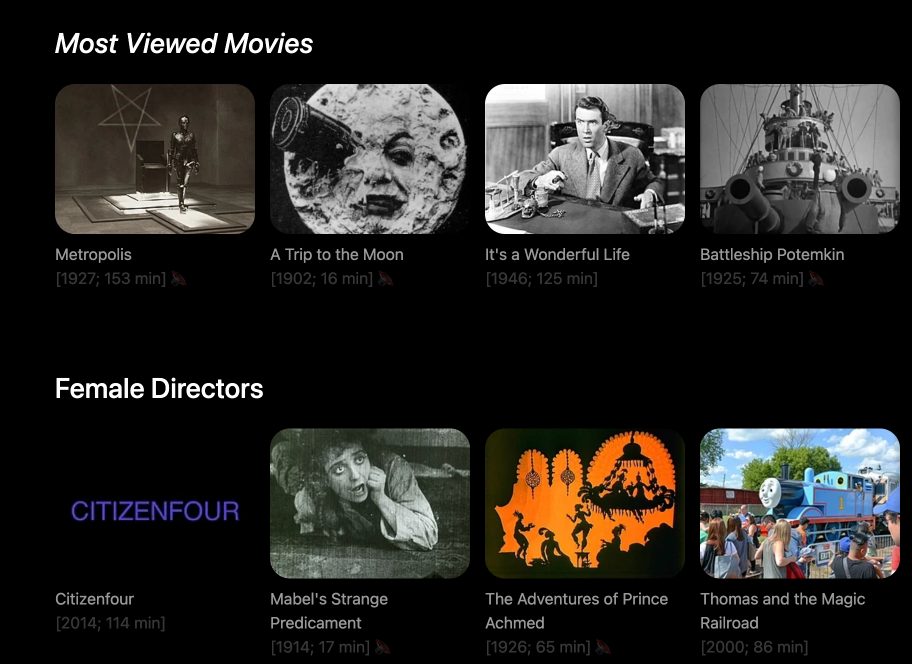
Table of Contents
WikiFlix, a free film library built on Wikimedia
WikiFlix is a community project, hosted on Toolforge by the Wikimedia Foundation, which now includes more than 4,000 works in the public domain or distributed under free licenses.
The tool uses Wikidata to structure information (year, genre, country, directors, actors, duration, summary, licenses) and broadcast sources such as Wikimedia Commons, Internet Archive, YouTube or Vimeo to play videos.
WikiFlix offers a giant film library in the form of a grid of jackets, with infinite scrolling and filters by categories.
The tool was developed by volunteer contributors from the Wikimedia ecosystem. It does not request any registration, does not collect any data and works directly from any browser.
How does WikiFlix work? Follow the guide
To access WikiFlix, just go to the homepage from a recent browser, on a computer or tablet. No need to create an account. From the moment of arrival, the page presents film covers in rows, with titles and some useful information.
The search is done by keyword (title, actor, director) and can be refined using filters by year, genre, country or popularity, based on structured Wikidata data, with general categories such as comedy, western, science fiction, mute, experimental or documentary.
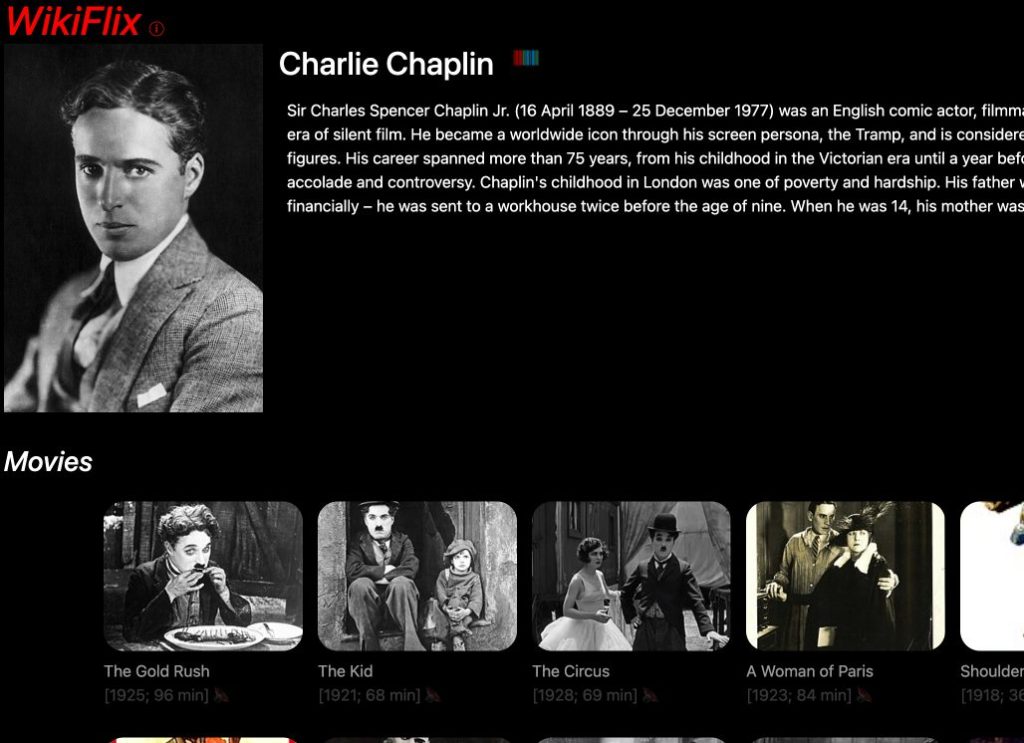
Clicking on a cover opens a detailed sheet with summary, duration, language, distribution, year and sometimes the original poster. You will also see the actors and the director. By clicking on the photo of one of them, WikiFlix displays the other films in which it has played present on the platform. The whole picture resembles the navigation of major streaming platforms – less ads, tracking and algorithmic recommendations.
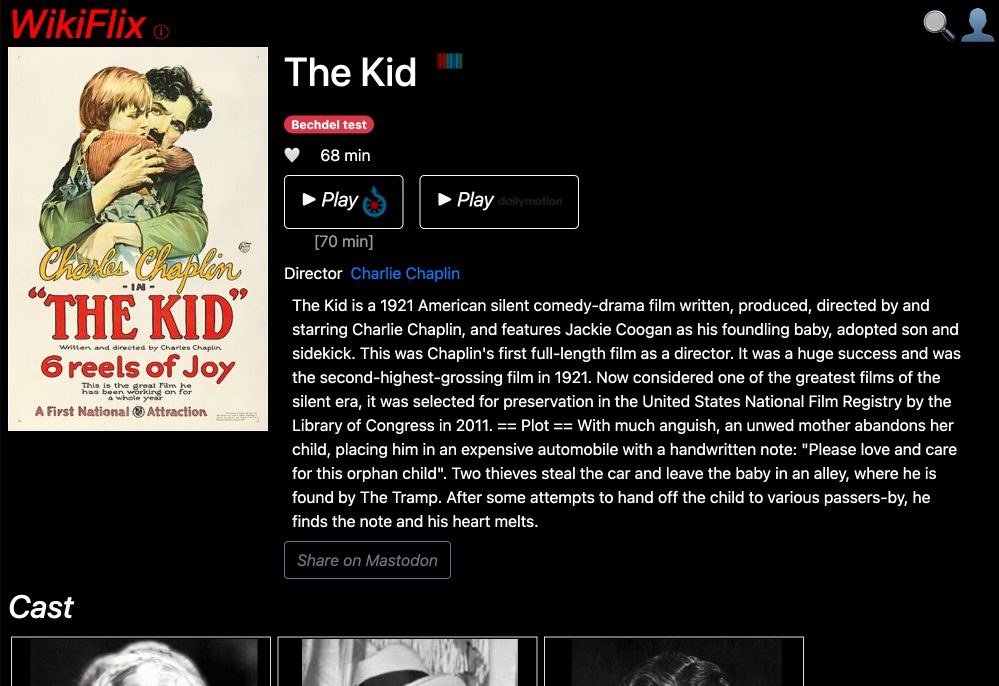
You will also see the licensing information that specifies that the film is in the public domain or a free license, accompanied by links to the platforms that host the video (Internet Archive, Wikimedia Commons, YouTube, Vimeo, etc.). The movie itself is played on the WikiFlix interface, without distractions or unwanted advertisements.
The set is based on automatically generated sheets from Wikidata : as soon as contributors enrich the data (summary, casting, countries, genres), the site is updated. The code, published as free software in the Wikimedia universe, allows the community to improve the tool over time.
Using WikiFlix in class
The platform is a real gift for personal use for all movie lovers. It also lends itself to many uses of cinema in the classroom. Here are some examples among others.
1. History and analysis of propaganda
The catalogue is full of archives from the early 20th century. For history teachers (college and high school), it is a gold mine to work on the First and Second World Wars. It contains periodical news and propaganda films.
- Work track: project a short news clip from 1916 without the sound, ask students to describe the image, and then analyse the discrepancy with historical reality.
2. Living languages and civilization
For English teachers, WikiFlix offers classics of American cinema (Charlie Chaplin, Buster Keaton, or black films from the 1940s and 1950s such as D.O.A or The Stranger Orson Welles).
- Work track: working on oral comprehension with films in original version. As these works are free, students can legally download them at home to perform dubbing or subtitling work, and then present it in class.
3. Media and Information Education (MIL)
The tool itself can become a subject of study in its own right. It makes it possible to address the concept of copyright, public domain and free license.
- Work track: Compare WikiFlix to a commercial platform. Understand where the images come from, who hosts them and why they are free. This is an excellent starting point for explaining the web economy and the free knowledge movement.
4. Plastic arts and cinema
Access to silent films and first animation tests makes it possible to study the fundamental techniques of editing and visual storytelling without the distractions of contemporary cinema.
One can also imagine a project such as a ‘public domain film festival’: Each group chooses a film on WikiFlix, prepares a presentation, debate or critical poster for another class or families.
I like, I don’t like
WikiFlix is not perfect. Don't expect to find the last blockbuster there. It is a niche tool, specialising in heritage and archives. However, for school use, it offers rare legal and technical security, and some beautiful cinematographic pearls as a bonus.
First and foremost, I like the peace of mind offered by the tool: the lawfulness is complete, eliminating any risk related to copyright in the classroom. The environment is healthy, with no advertising or toxic recommendation algorithms that could distract students. Total free is a major asset.
I like less whereas it must be accepted that the catalogue is mainly composed of works prior to the 1960s or of independent productions. As the interface and metadata remain in English, the search sometimes requires to grope with specific keywords to find the rare gem.
Thousands of free movies for all your projects
WikiFlix transforms an archive database into a functional and easy-to-use classroom video library. It is a good tool to integrate video into your courses without fear of advertising or illegality.
The platform allows you to have a free film library, accessible without creating an account or private trackers.
Just add the WikiFlix website to your teacher's favourites: the day you need to illustrate a chapter with a film or documentary, all you have to do is dig into the film library.
 English