Last updated on 12 May 2026
Between explaining to your students the migration of humpback whales with a diagram on the table, or having it commented live by a specialist from Reunion: what would you choose?
This is exactly what is proposed Sciences.live : bring a scientific mediator into your classroom, via videoconference, to facilitate a 50-minute workshop with your students.
Not a pre-recorded video. Not a MOOC to watch independently. A real-time exchange, where the mediator adapts his speech, answers questions, bounces back on your students' remarks.
The project is supported by four Centres for Scientific, Technical and Industrial Culture (CCSTI) in Nouvelle-Aquitaine, in partnership with Education Nationale.
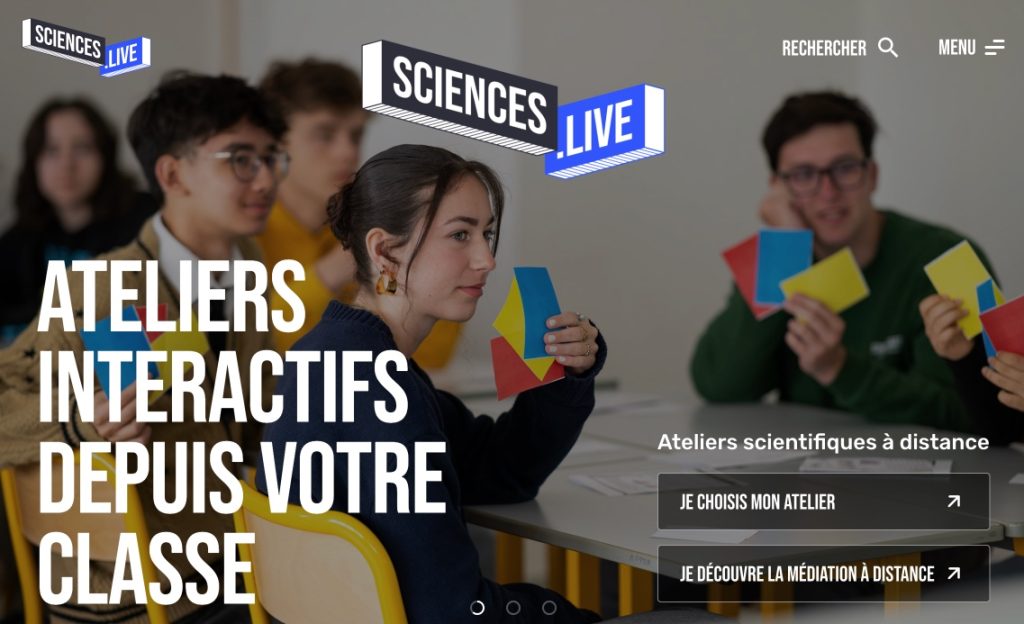
The objective is clear: enabling all classes, regardless of territory, to access high-quality scientific mediation. The scheme is aimed at both rural schools and urban colleges or high schools, for which it is still difficult to organise an outing.
A real good idea to put in a lively way the Scientific Culture within the reach of all teachers and their students.
Table of Contents
How the Sciences.live platform actually works
Follow the guide, everything is done in four simple steps:
- Choose a workshop in the Catalogue of Scientific Animations proposed: biodiversity, archaeology, space, mathematics, humanities … The themes cover a wide disciplinary spectrum.
- Reserve a slot on the site. You then receive a "teaching" document with the pedagogical objectives, the necessary technical material, a connection tutorial and sometimes annexes to print for the students.
- Log in ten minutes before the session to check that everything is working (sound, image, video projector).
- Live the workshop for 50 minutes. The mediator animates, questions, launch quizzes or challenges. Your role is essentially to facilitate class-side speaking.
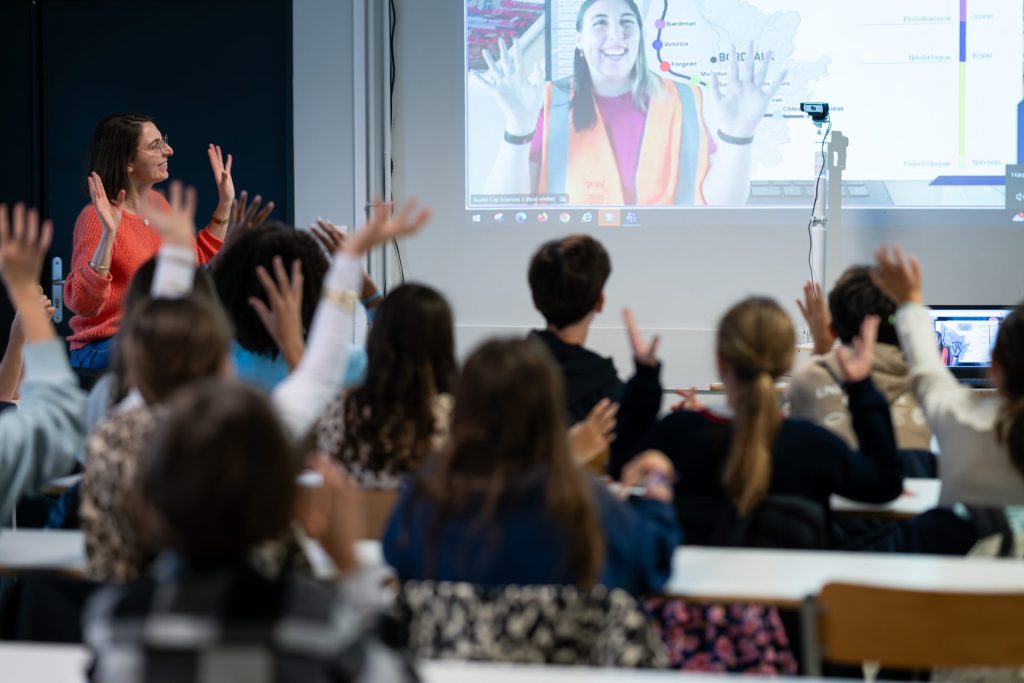
© GAUTIER DUFAU
On the hardware side, nothing exotic: a computer, a webcam, a microphone, a projector and a stable connection (preferably wired). The standard equipment of many classrooms today.
These sequences will get your students out of the routine with proven pedagogical methods designed to engage them.
A rich catalogue that goes from CP to Terminale
The Sciences.live catalogue is gradually expanding. The stated objective is to reach around 40 workshops within three years. Currently, about twenty themes are available, designed to meet the needs of different levels of education.
Some examples for primary schools (cycles 2 and 3):
- A workshop on pollinating insects, accessible from the CE1, to address local biodiversity.
- An introduction to archaeology where students help a mediator ‘save’ a threatened site – perfect for crossing history and science.
For the College:
- The Cetacean Workshop, hosted live from Réunion by theGLOBICE Association, addresses marine ecosystems and conservation issues.
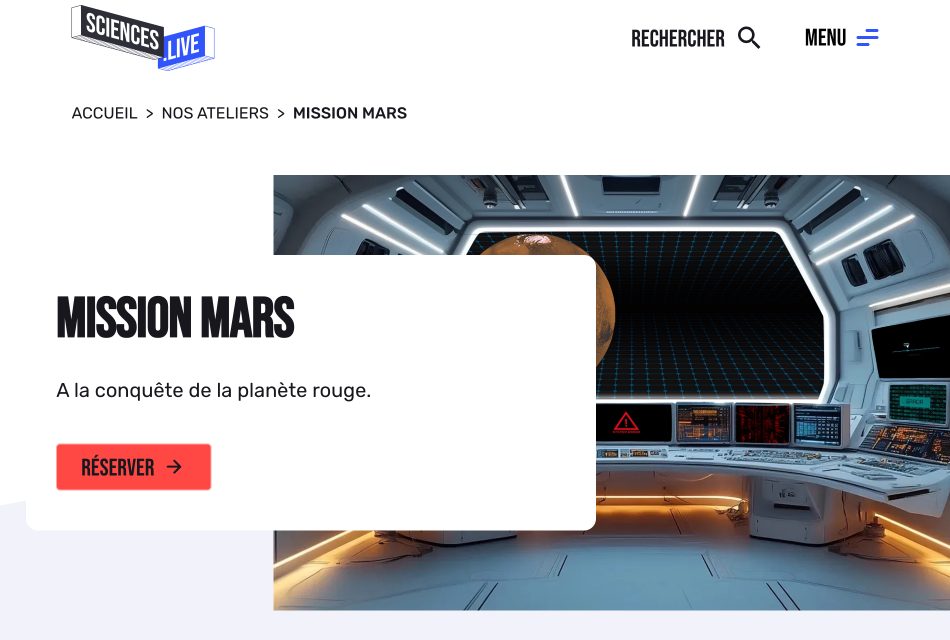
- Workshops on space and space exploration, linked to the 4th and 3rd physics-chemistry programmes.
For high school:
- More specific themes related to scientific specialties: applied mathematics, technological issues, humanities and social sciences.
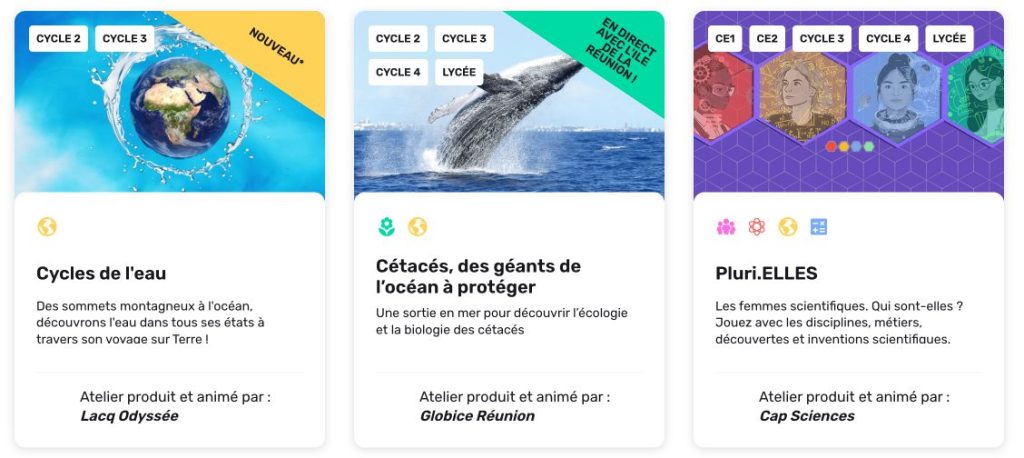
Each workshop clearly specifies the target levels, which makes it possible to quickly filter the offer. The complete catalogue is available online at sciences.live/nos-ateliers.
The content is developed by the mediators of the four CCSTIs, sometimes in collaboration with specialized scientific partners. Most importantly, teachers are involved in the design to ensure consistency with the curriculum. Each workshop is tested in real-world conditions in several establishments before being deployed.
What it changes in practice
Your sixth grade students ask you how to excavate an archaeological site? You can show them a YouTube video. Or have them ask the question to an archaeologist, live. The difference? The mediator perceives hesitation in a question, reformulates an explanation that has not been understood, digs a point that fascinates the class.
Céline Domenc, Director of Education at Cap Sciences and project manager on the Sciences.live platform, summarises the approach:
‘Unlike static digital resources, a live workshop makes it possible to adapt to the class level, the students’ reactions and their spontaneous questions.’
Find here the full interview of Céline Domenc at Educ@tech
Three use scenarios among many others:
- Introducing a chapter: the cetacean workshop is preparing an SVT sequence on marine ecosystems. Students arrive at the next class with questions and already aroused curiosity.
- Concluding or deepening: a workshop on archaeology anchors notions seen in history and gives a concrete dimension to the work of researchers.
- Cultural opening: a class of CM2 in rural areas discovers space exploration without the need for a nearby planetarium.
Workshops are not designed to replace a course. You remain master of the pedagogical progress.
A deliberately reduced preparation load
This is often the main obstacle: how much time will I have to spend preparing this type of animation? Here, the answer is simple: the minimum. The Sciences.live team did the right thing. Once the reservation has been confirmed, you will receive everything you need by email. No sequence to build, no documents to create. You can integrate the workshop into your planning without disrupting your organisation.
For colleagues less comfortable with videoconferencing, the team Sciences.live offers a technical test a few days before the session. And on D-Day, the mediator's contact details are provided to quickly resolve any connection issues.
Who is behind Sciences.live?
Sciences.live is a collective project led by four Centers for Scientific, Technical and Industrial Culture (CCSTI) :
- Lacq Odyssey (Mourenx)
- Cap Sciences (Bordeaux)
- Espace Mendès France (Poitiers)
- Recreation (Limoges)
The project is supported by the Academic region of Nouvelle-Aquitaine and works closely with theNational Education to ensure alignment of content with school curricula.
It's up to you to test
One hundred euros and an internet connection: this is the entry ticket for provide your students with a scientific meeting that they will not soon forget and Awakening Who Knows Vocations…
Consult the complete catalogue of available animations on the website of Sciences.live. You will find the details of each workshop, the levels involved and the slots available.
To go further, Check out the interview with Céline Domenc, Director of Education at Cap Sciences and Project Manager on the Sciences.live platform

 English